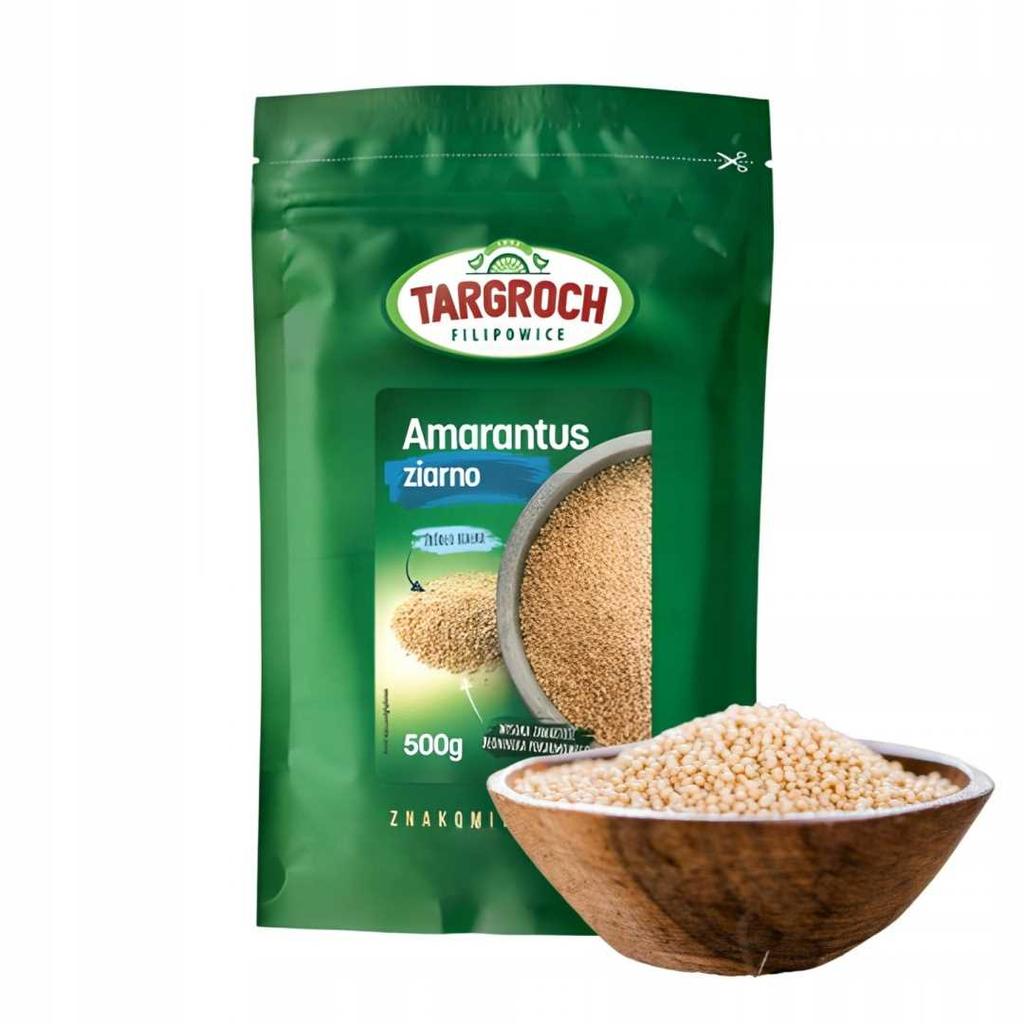
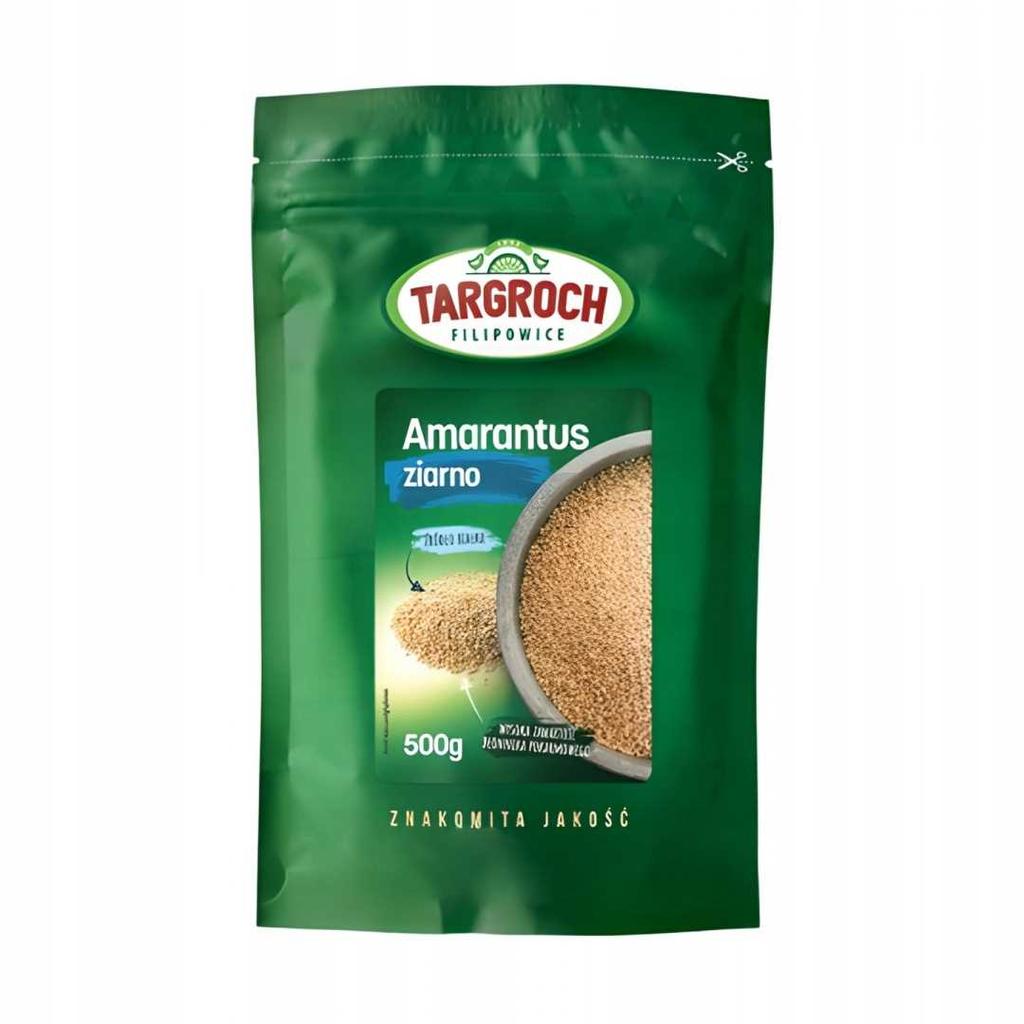
Amaranth Grains 500g Natural Amaranth Grains Amaranth Grains 500g Country of Origin: India It is commonly known as amaranth, from the Latin Amaranthus cruentus, but from a biological point of view it is amaranth. It was a major cultivated plant even before our era, during the times of the Incas and Aztecs. It appeared in Europe many centuries later, initially only for ornamental purposes. Blooming amaranth comes in shades of pink, purple, and red. It is from the color of its inflorescences and its Latin name that the color amaranth was created. Amaranth in the Kitchen Amaranth, as a pseudo-cereal, is a good idea for diversifying dinner, instead of traditional rice or groats. It works perfectly as an addition to sweet and savory baked goods, oatmeal, meatballs, stuffings, pâtés, and casseroles. It is appreciated for its delicately nutty flavor and eaten in various corners of the world - in India as an addition to rice or sweet laddoos, and in the Himalayas as chapati. Ingredients Amaranth grain Storage Store in a cool and dry place in a tightly closed container. Use For baking (bread, cookies, tart bases), as an addition to vegetarian dishes (soups, cutlets, meatballs or as stuffing). Amaranth is also produced into flour, which can be a good complement to other flours - thanks to its significant mineral content, it increases the nutritional value of the product or dish. Amaranth flour, however, isn't suitable for all baked goods because it doesn't contain gluten—a protein that makes dough elastic. It's also important to remember that due to its high fat content, this flour quickly becomes rancid, so it shouldn't be stored for long. It's best to make your own flour by grinding the seeds very finely in a coffee grinder. Nutritional value of the product in 100 g Energy value 1686 kJ / 401 kcal Fat 7.5g including saturated fatty acids 1.46g Carbohydrates 59.4g including sugars 5.7g Fiber 14 g Protein 16.9 g Salt** 0.01 g Vitamins and minerals in 100 g (%NRV*) Potassium 423 mg (21%) Calcium 159 mg (20%) Magnesium 239 mg (64%) Iron 7.8 mg (56%) Natural deviations possible. *RWS – Reference Intake Values of an average adult (8400kJ/2000kcal). **The salt content is exclusively due to the presence of naturally occurring salts. Allergen information The plant also packs: sesame, almonds, products containing gluten, various nuts. Despite all efforts, the presence of these raw materials in the product cannot be 100% ruled out. ATTENTION 1⃣Photo / visualization of the product may differ from the actual appearance. 2⃣We strive to keep all the information on our website up to date, however the data in the table above may vary slightly depending on the product batch. 3⃣The values provided were calculated from recipes according to our suppliers' data and/or professional literature.


 Rückerstattung bei Nichtlieferung