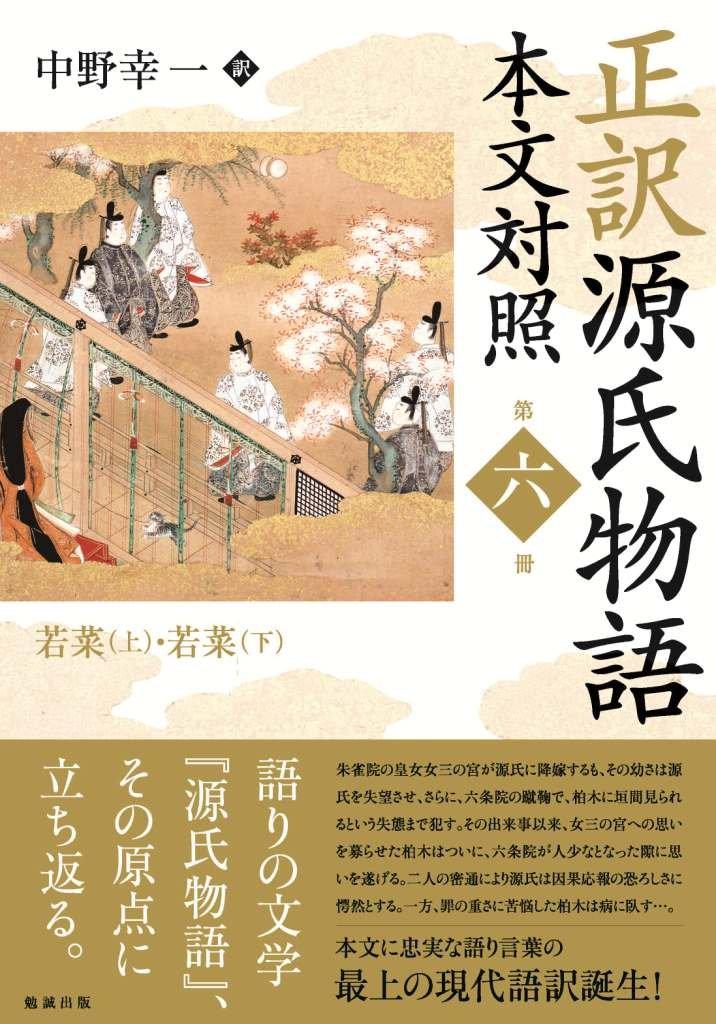
Der sechste Band ist Wakana, Bände 1 und 2. Es deckt Ereignisse vom Winter, als Genji 39 Jahre alt war, bis zum Ende des Jahres ab, als er 47 Jahre alt war.
Obwohl Onna San no Miya, die Tochter von Kaiser Suzaku, mit Genji verheiratet ist, ist Genji von ihrer Unreife enttäuscht und begeht sogar den Fehler, von Kashiwagi während eines Kemari-Spiels in Rokujo-in gesehen zu werden.. Seit diesem Vorfall sind Kashiwagis Gefühle für Onna San no Miya stärker geworden, und er bekommt endlich, was er sich wünscht, als Rokujo-in leer ist.. Die Affäre des Paares versetzt Genji in Entsetzen über die Schrecken des Karmas.. Währenddessen erkrankt Kashiwagi, geplagt von der Schwere seiner Tat...
Der Aufsatz am Ende des Bandes untersucht die Lebensstile des Adels. Wie viele Leute schlichen sich tatsächlich im Kapitel „Yugao“ herum? Sollten die Jalousien in der Szene in „Wakana“ (Wakana) wo Kashiwagi einen Blick auf die Dritte Prinzessin erhascht, als „aufgerollt“ oder „aufgezogen“ interpretiert werden? Dieses Buch taucht ein in die Realität aristokratischer Lebensstile, die jenseits unseres modernen Verständnisses liegen.
[Merkmale dieses Buches]
1. Die Übersetzung ist in schönem, korrektem Japanisch verfasst und nutzt den erzählerischen Stil, der das Wesen des Geschichtenerzählens ausmacht, optimal.
2. Die Geschichte wird originalgetreu übersetzt, und in einem ersten Durchgang wird die Übersetzung in der unteren Spalte im Text-zu-Text-Format mit der Geschichte selbst verglichen.
3. Zitate, die nicht in die Übersetzung aufgenommen werden können, sowie Erläuterungen zu Ortsnamen, jährlichen Veranstaltungen und Gerichtsaufgaben sind deutlich in der oberen Spalte aufgeführt.
4. Die Übersetzung ist effektiv und sorgfältig, hebt die Höflichkeitssprache hervor und berücksichtigt den Status der Charaktere und ihre zwischenmenschlichen Beziehungen.
5. Subjekte, die im Haupttext der Geschichte ausgelassen wurden, werden nach Bedarf hinzugefügt, und Namen werden in Klammern angegeben, wo dies für Charaktere angebracht ist, die mit offiziellen Titeln, als Damen oder als Prinzessinnen bezeichnet werden, um das Leseverständnis zu erleichtern.
6. Die Übersetzung ist in Absätze unterteilt, und Unterüberschriften werden verwendet, um den Inhalt klar darzustellen.. Zusätzlich wird am Anfang des Bandes eine „Gliederungsübersicht“ bereitgestellt, die es ermöglicht, den Aufbau jedes Bandes auf einen Blick zu erfassen.
7. Am Ende jedes Bandes gibt es begleitende Illustrationen und interessante Essays, die helfen, das Verständnis von Die Geschichte des Prinzen Genji zu vertiefen.


 Rückerstattung bei Nichtlieferung